March 4, 2026 · 5 min read
How Restaurants and Hotels in Cambodia Can Use AI to Never Miss a Booking Again
A restaurant saw 141% more phone reservations. A hotel chain automated 96% of guest messages. Here is how hospitality businesses in Cambodia can do the same.
Summary
A restaurant saw 141% more phone reservations by letting AI answer every call. A hotel chain automated 96% of guest messages. For hospitality businesses in Cambodia, the multilingual advantage alone — AI responding in English, Chinese, French, Korean — is a competitive edge you cannot staff for manually.
Listen to article
If you run a restaurant, hotel, or cafe in Phnom Penh, you know the problem. A customer calls during the lunch rush — nobody picks up. Someone sends a Telegram message at 11pm asking about tomorrow's availability — your team sees it the next morning, but the customer already booked somewhere else.
Every missed message is a missed booking. And it adds up fast.
What is changing in hospitality
Businesses in the hospitality industry are now using AI to handle the conversations that used to fall through the cracks. Not to replace their team, but to make sure no customer is left waiting.
A restaurant using an AI phone assistant saw a 141% increase in over-the-phone bookings — simply because every call got answered, even during the busiest hours of service. The AI takes the reservation details, confirms the booking, and the staff never has to leave the floor.
A hotel management company with 35 properties connected AI to their phone, WhatsApp, and website chat. After a few months of tuning, 96% of guest inquiries are now handled automatically — from room availability questions to check-in instructions to restaurant recommendations.
What this looks like in practice
Imagine a boutique hotel on Street 240 or a restaurant in BKK1. Today, customers reach out through five different channels: Telegram, Facebook Messenger, WhatsApp, phone calls, and email. Often in multiple languages.
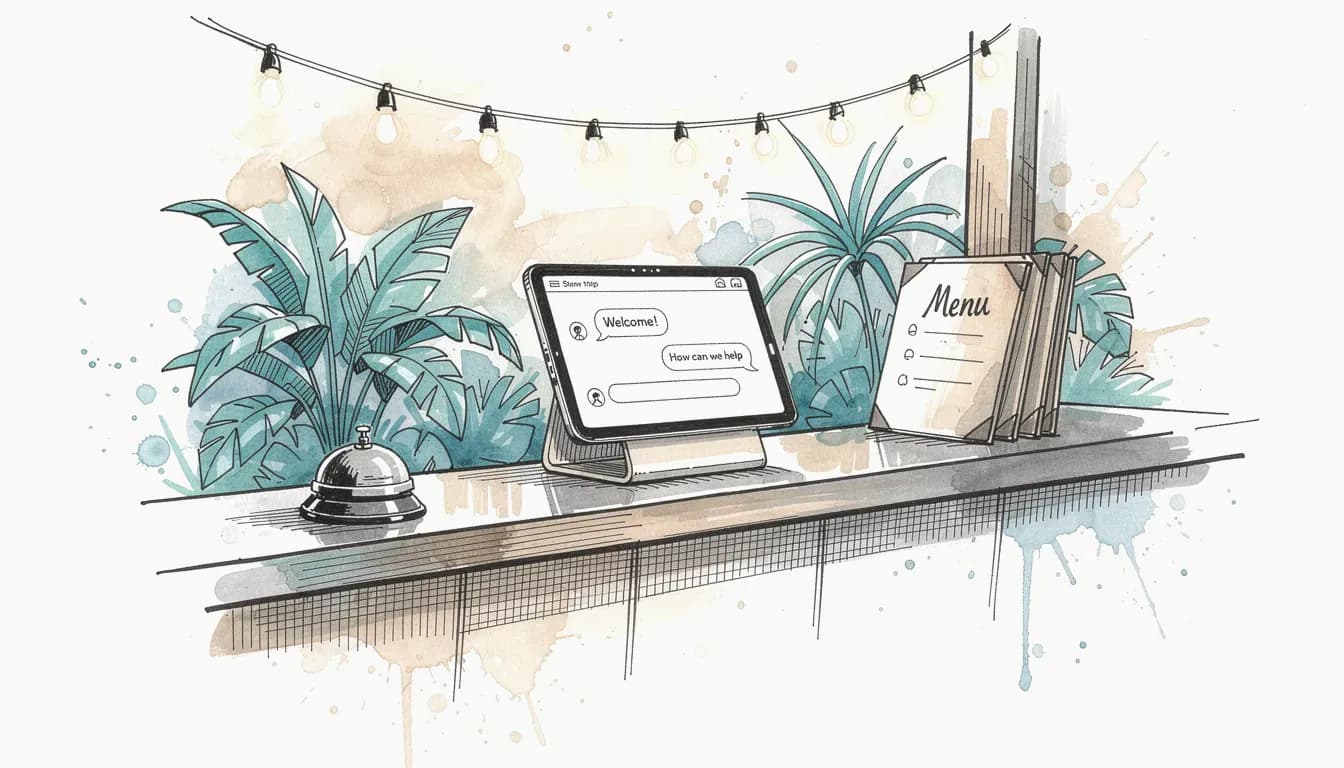
With AI customer service set up properly: - A guest messages on Telegram at midnight asking if you have a room for Saturday — the AI checks availability and confirms instantly - Someone calls during dinner service to book a table — the AI takes the reservation without interrupting your staff - A tourist sends a Facebook message in English asking about your menu — the AI replies with accurate information in seconds - A returning guest gets a personalized pre-arrival message with spa offers based on their previous visits
One boutique hotel in Southeast Asia started sending AI-personalized pre-arrival offers to guests — spa packages, dinner specials — based on booking type and past stays. The result: 21% increase in additional service sales with zero extra staff effort.
The multilingual advantage
This is where businesses in Cambodia have a unique opportunity. Your customers speak multiple languages. Your staff may not cover all of them equally well.
AI assistants can respond fluently in English, Chinese, French, Korean, and Japanese — all from the same system. For a hotel or restaurant that serves international tourists, this is a significant competitive advantage that would be impossible to staff for manually.
What does not work
AI is not ready to handle complaints from frustrated guests. It cannot read the room when someone is upset about a noisy neighbor. It should not negotiate group booking rates for a wedding party.
The best implementations have clear rules: the AI handles routine questions and bookings, and immediately connects a team member when the situation needs a human touch. The businesses that skip this step lose customer trust.
Getting started
The most successful hospitality businesses start with one channel:
If your customers mostly use Telegram, start there. If you get a lot of phone calls during service, start with an AI phone assistant. Do not try to automate everything at once.
The configuration matters more than the tool. An AI assistant trained on your actual menu, your real room types, and your genuine policies will perform dramatically better than a generic chatbot. This setup takes careful work — understanding your customer patterns, mapping common questions, and testing extensively before going live.
The technology gap in Cambodia means you can adopt these tools without replacing old systems. Many of your competitors have not started yet. The businesses that set this up now will have a real advantage as tourism continues to grow.
Want to explore AI for your restaurant or hotel? Let us know — we work with hospitality businesses in Phnom Penh to set up and customize these systems.
Keep reading